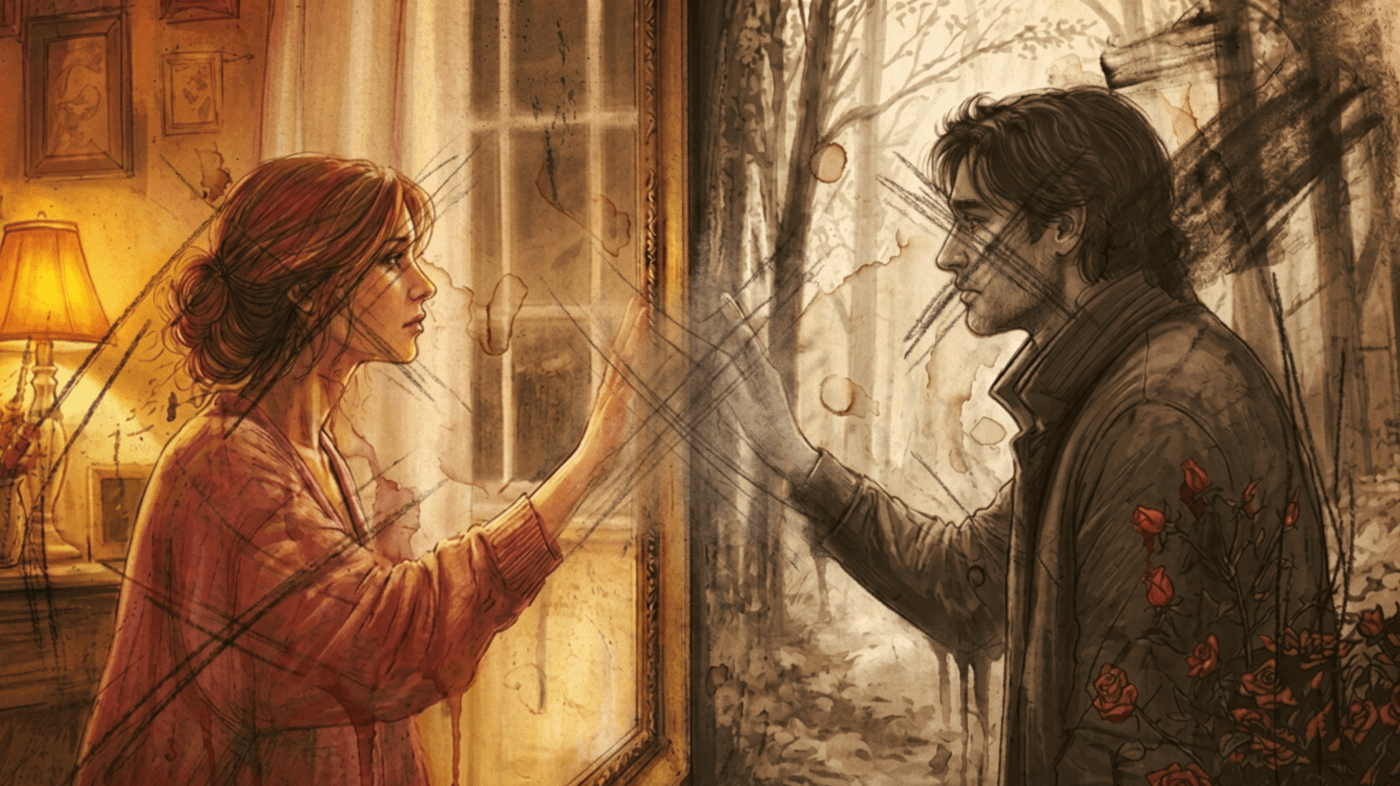
Dear friend on the other side.
I hope you are doing well, yes,
I do.
Dear brother in the mirror
Did you do what I dared not?
Like… take her hand and not let go?
Did you say…
I do?
And did she love you back?
As in… not let go of you?
I really hope she did…
Hold you tight.
When the darkness came
Did you also feel alone?
Or was she there to be the warmth?
I know I keep on rambling, but…
Does she wait for you?
When you come home late at night…
Is she there with the heating on?
And the lights dimmed low?
Is there a place by her side?
The extra pillow also used…
Or was your heart too small?
Your eyes too big…
Like mine?
I really want to believe you did better.
That you looked her in the eyes.
Lifted her onto your horse…
To disappear into the distance.
Far away.
Together.
I do.
Paramelotron (n.) /pær-ə-MEL-ə-tron/
Etymology: Greek para- (“alongside, beside”) + melos (“song, melody”) echoing faintly with melas (“black, dark”) + -tron (“instrument, means of”).
- An instrument or device said to produce a melody that plays alongside one’s own — a second song running in parallel to a life being lived, its notes not quite matching but never entirely lost either.
- (poetic) A mirror, or mirror-like device, through which one senses another version of oneself, humming a tune just slightly different — tinged with longing, yet carrying its own quiet promise that things might still turn out well, on that other side.
- (figurative) The gentle hope that somewhere, just beside one’s own existence, another version of the same melody continues — softer, perhaps sadder in places, but not without its own light; a reminder that a different note doesn’t mean a worse one.
Usage: “She spoke of the paramelotron sometimes — that faint melody she swore played just behind her own life, as though someone else were living it, gently, and perhaps happily, just out of reach.”


Leave a Reply